
Turkey Driving Licence Practice Tests, Traffic Signs
& e-Devlet Guidance

Study and practice of the Turkey driving licence theory test, including answers to sample questions, the identification of Turkish traffic signs, and information on the main driving rules and regulations in Turkey to help prepare for your theory test.

Choose your licence class and start practicing exam-style questions based on the most common topics that appear in the Turkish driving theory exam.
Adana
Konya
Mugla
Kayseri
Denizli

Turkey Traffic Signs Guide

Before you take Turkey driving licence practice tests, make sure you understand Turkish road signs. Study signs by category and learn what each sign means in real traffic situations.

Road Signs and Their Meanings
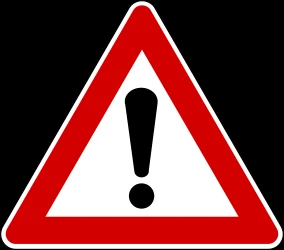
Warning for a danger with no specific traffic sign.
Warning for a danger with no specific traffic sign.

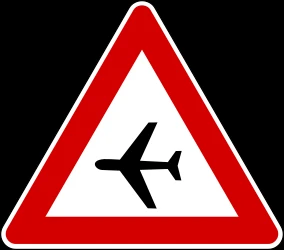
Warning for low-flying aircrafts.
Warning for low-flying aircrafts.

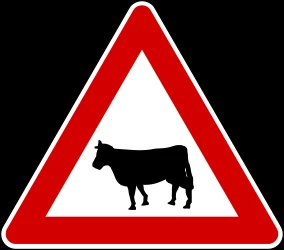
Warning for cattle on the road.
Warning for cattle on the road.

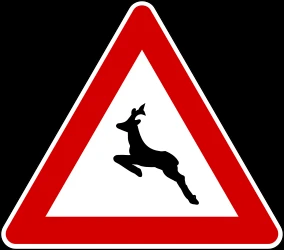
Warning for crossing deer.
Warning for crossing deer.

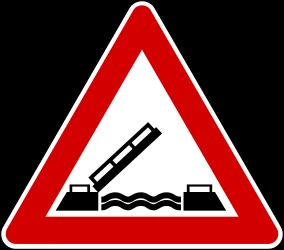
Warning for a movable bridge.
Warning for a movable bridge.

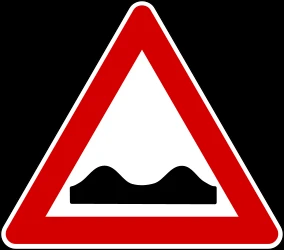
Warning for a bad road surface.
Warning for a bad road surface.

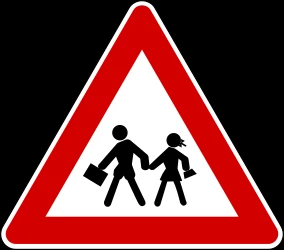
Warning for children.
Warning for children.

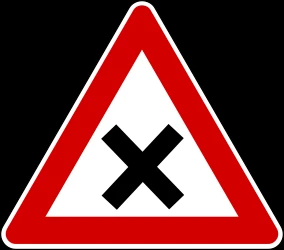
Warning for an uncontrolled crossroad.
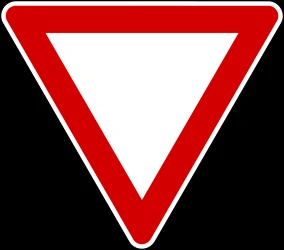
Warning for an uncontrolled crossroad.

Give way to all drivers.
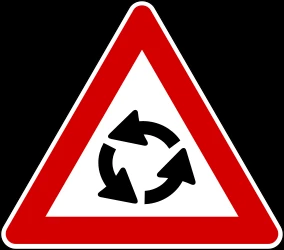
Give way to all drivers.

Warning for a roundabout.
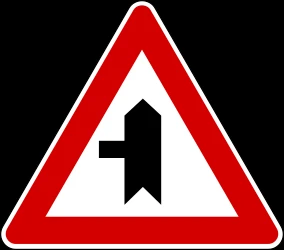
Warning for a roundabout.

Warning for a crossroad with a side road on the left.
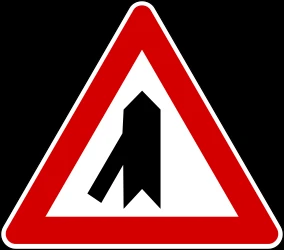
Warning for a crossroad with a side road on the left.

Warning for a crossroad with a sharp side road on the left.

Warning for a crossroad with a sharp side road on the left.

Driving Rules & Safety Guidelines for Learners in Turkey

Must-know road rules, sign basics, and safe-driving guidance to help you prepare for the theory exam and drive responsibly.

Categories

Traffic rules turkey
Traffic flow on highways
Traffic flows on the right side of the road. Drivers must drive on the right side according to the direction of travel, and on multi-lane roads, in the lane appropriate to their speed and road and traffic conditions. Before changing lanes, drivers must wait for vehicles in the intended lane to pass safely. Lane changes must not disrupt or endanger traffic, and drivers must not continuously occupy the leftmost lane. On roads with two or more lanes, vehicles other than motorcycles, cars, vans, panel vans, minibuses, and buses must adhere to the rightmost lane except when overtaking or turning. Emergency lanes and shoulders may only be used in cases such as traffic accidents, breakdowns, emergency assistance, rescue, snow removal, accident investigation, and maintaining general security and public order. Multiple consecutive lane changes that disrupt or endanger traffic are prohibited. On one-way roads, driving in the opposite direction is strictly forbidden. Livestock herders using certain highway sections must lead their animals along the far right side of the road in the direction of travel, occupying the least possible width. Fines range from 235 to 1,002 Turkish Lira depending on the nature of the violation.
Compliance with traffic signs and rules
All road users must comply with warnings and signals from traffic police officers or other authorised persons in special uniforms, traffic lights, matters indicated by traffic signs, devices and road markings, and other rules related to traffic safety and order. Drivers who fail to obey stop signs, red traffic lights, and audible signals from traffic police shall be fined 235 Turkish Lira, while failure to obey other traffic signs and rules results in a fine of 108 Turkish Lira. Drivers who violate the red light rule three times within one year will have their license revoked for thirty days for the first instance, forty-five days for the second, and sixty days for subsequent violations. Drivers whose licenses are revoked twice or more in the same year must undergo a psycho-technical evaluation and psychiatric examination before their license is returned, provided all outstanding traffic fines have been paid.
Ddriving under influence
It is prohibited for drivers who have consumed narcotics, stimulants, or alcohol to drive on the road. Law enforcement uses technical devices to determine drug use or blood alcohol levels. Drivers involved in a traffic accident resulting in injury, death, or material damage are required to undergo testing. Drivers who object to or refuse testing are taken to a forensic medicine institution where blood, saliva, or urine samples are collected. Drivers found with a blood alcohol level exceeding 0.50 per mille will be fined 700 Turkish Lira and have their license revoked for six months. For vehicles other than private cars, the lower limit is 0.21 per mille. Repeat offenders within five years face fines of 877 Turkish Lira and a two-year revocation for a second offence, and 1,407 Turkish Lira and a five-year revocation for a third or subsequent offence. Drivers with a blood alcohol level exceeding 1.00 per mille are also subject to the Turkish Penal Code. Drivers found to have consumed drugs or stimulants will be fined 3,600 Turkish Lira and have their license revoked for five years, with Turkish Penal Code provisions also applying. Refusing to allow testing results in a fine of 2,000 Turkish Lira and a two-year license revocation. Drivers whose licenses are revoked for a second time within five years must undergo driver behaviour improvement training, and those revoked three or more times must undergo psycho-technical evaluation and psychiatric examination.
Driving time limits
Drivers of motor vehicles carrying goods and passengers for commercial purposes are prohibited from driving in violation of permitted driving hours and from allowing others to do so. Drivers operating vehicles in violation of this provision shall be fined 1,800,000 Turkish Lira. If the driver is not also the vehicle owner, a penalty notice shall be issued to the vehicle owner for 3,600,000 Turkish Lira and to the operator or business owner for 7,200,000 Turkish Lira.
Speed limits
The maximum speed limits for motor vehicles are 90 km/h on intercity two-way highways, 110 km/h on divided highways, and 120 km/h on motorways. The Ministry of Interior is authorised to increase these limits by 20 km/h for cars depending on road standards. Speed limits may be reduced or increased by authorised bodies depending on road and traffic conditions, and changes will be indicated by traffic signs. Fines for exceeding speed limits are 235 Turkish Lira for exceeding the limit by ten to thirty percent, 488 Turkish Lira for exceeding by thirty to fifty percent, and 1,002 Turkish Lira for exceeding by more than fifty percent. Drivers who exceed the speed limit by more than 30 percent five times within one year will have their license revoked for one year, and must pass a psycho-technical and psychiatric evaluation before it is returned. A second revocation within five years results in license cancellation, requiring the driver to attend training courses and pass exams to regain their license. The manufacture, importation, and possession of devices used to detect speed enforcement equipment is prohibited and carries penalties including fines and imprisonment.
Speed suitable for conditions
Drivers must reduce speed when approaching intersections, entering curves, approaching hilltops, driving on winding roads, approaching pedestrian crossings, level crossings, tunnels, narrow bridges and culverts, and entering construction and repair areas. Drivers must adjust their speed to the load and technical specifications of the vehicle as well as to visibility, road, weather, and traffic conditions. A safe following distance must be maintained from the vehicle ahead. Drivers in convoys or groups must ensure sufficient gaps between vehicles. Failure to comply results in a fine of 1,800,000 Turkish Lira.
Turning rules
When turning right, drivers must signal, enter the rightmost lane, reduce speed, make a narrow curve, and enter the rightmost lane of the road being turned onto. When turning left, drivers must signal, approach the left side of the lane, reduce speed, give priority to vehicles approaching from the right, wait for oncoming vehicles too close to stop safely, make a wide curve to avoid obstructing following traffic, enter a suitable lane other than the far right, and move right as quickly as possible without endangering traffic. At roundabouts, drivers must signal, reduce speed, enter from the lane closest to the central island, avoid unnecessary lane changes, exit by turning right when approaching the intended road, enter a suitable lane, and move right as quickly as possible. When turning, drivers must give way to pedestrians crossing lawfully, cyclists and electric scooter users on bike paths and lanes, and to oncoming traffic when turning left. Failure to comply results in a fine of 1,800,000 Turkish Lira.
Overtaking rules
To overtake, the following vehicle must not have already begun overtaking, the vehicle in front must not have signalled an intention to overtake, and on two-way roads the lane ahead must be sufficiently clear for all road users. Overtaking is performed from the left lane, the driver being overtaken is warned with sound and light signals, and after maintaining a safe distance the maneuver is completed by signalling and returning to the original lane. Overtaking by moving to the right or using the shoulder is prohibited. Overtaking is prohibited where indicated by traffic signs, on hills and bends with poor visibility, approaching pedestrian and school crossings, at intersections, railway crossings and their approaches, and on single-lane two-way bridges and tunnels. Failure to comply results in a fine of 3,600,000 Turkish Lira.
Rules for vehicles being overtaken
When receiving a signal to be overtaken, drivers on two-way roads must drive on the right edge of the carriageway and not increase their speed. On narrow or busy roads, drivers must move to the right edge, slow down, and stop if necessary to allow safe overtaking. Upon receiving a signal from a priority vehicle, drivers must make way and stop if necessary. It is prohibited to fail to yield to those wishing to pass, to attempt to overtake another vehicle, or to make a left turn while being passed. Failure to comply results in a fine of 1,800,000 Turkish Lira.
Lane keeping and other rules
Lane changes are prohibited except when overtaking, turning, stopping, or parking. Lane changes are prohibited when approaching intersections, within 150 metres outside residential areas and 30 metres within residential areas. Driving in a lane unsuitable for the vehicle type or speed is prohibited, as is changing lanes without signalling. On two-way roads, drivers must pull over to the right to allow oncoming vehicles to pass, and on mountainous roads, descending vehicles must yield to ascending vehicles by entering a refuge area, pulling over, or reversing if necessary. Drivers must maintain a safe and adequate following distance as specified in regulations. Driving in a manner that obstructs other vehicles without a compelling reason is prohibited, as are unnecessary sudden decelerations. On narrow roads, non-motorised vehicles must yield to motorised vehicles in the following order: cars, minibuses, vans, buses, trucks, SUVs, wheeled tractors, and construction machinery.
Loading rules
It is prohibited to carry passengers beyond vehicle capacity, exceed maximum loaded weight or permitted axle weights, load in a manner dangerous to road structure or traffic safety, transport hazardous substances without necessary permits, transport oversized loads without special permission, carry passengers on top of cargo or outside the vehicle, load cargo in a way that may fall, spill, scatter, leak, slide or make noise on the road, load in a way that disrupts balance or creates sharp protrusions, or load in a way that obstructs the driver's view, covers license plates, identification marks, stop and turn lights, or reflectors. Towing is prohibited unless all prescribed conditions and precautions are fulfilled. Fines range from 50 to 3,000 Turkish Lira depending on the nature of the violation. For exceeding maximum loaded weight, fines are 500 Turkish Lira for exceeding by 10 percent, 1,000 Turkish Lira for 15 percent, 1,500 Turkish Lira for 20 percent, 2,000 Turkish Lira for 25 percent, and 3,000 Turkish Lira for more than 25 percent, applied separately to both the operator and sender. Vehicles exceeding maximum loaded weight by more than 20 percent will not be allowed to continue until the excess load is brought into compliance. Vehicles with foreign license plates in international transport will not be allowed to continue until all applicable fines have been collected.

How Driving Licences Work in Turkey
(Sürücü Kursu, Theory Exam & Practical Test)

There will be some assistance in your theory preparation if you familiarise yourself with the driver licence process in Turkey. To drive for the first time in Turkey, you must attend an approved driving school (Sürücü Kursu) and complete the required theory classes before you can take the electronic theory test (e-exam) and then the practical driving test.

The process is the same for all drivers in Turkey and is done through official channels such as e-Devlet, including the Ministry of National Education, for applications for and results for theory and practical driving tests.

This page helps you prepare for the theory part of that journey: Practice Turkey driving theory test questions, learn traffic signs, and review the most important road rules that commonly appear in the exam.

Types of Driving Licence in Turkey

Turkey follows EU-style licence categories. Common examples include:

  • A1 / A2 / A – Motorcycles
  • B – Passenger cars (most common first licence)
  • C / D – Trucks and buses
  • BE / CE / DE – Vehicle + trailer combinations

Most first-time car drivers apply for Class B.

Minimum Age and Eligibility

General minimum ages needed for different categories are as follows:

  • Class B (automobile): 18 years
  • Motorcycle Categories: 16 or 18 depending on what the class of license is
  • Higher Categories: 18 years old minimum

Applicants must generally:

  • Complete certified driving education
  • Pass a medical examination
  • Meet educational requirements
  • Pass theory and practical tests

Because of frequent changes, always verify with the current official state agency about aggregate minimum licensing requirement(s) before applying for your new driver’s license.

Documents Commonly Required

While exact requirements may vary, applicants commonly prepare:

  • Proof of Identity (and proof of lawful presence if applicable)
  • Proof of residency/address
  • Social Security Number or acceptable alternative (state-specific)
  • Any required parent/guardian consent for minors (state-specific)

Keep digital copies ready and check your state’s official checklist before applying.

Typical Application Steps

A common flow looks like this:

  • Turkish ID card or residence permit
  • Biometric photos
  • Medical report
  • Driving course completion documents
  • Application form and required fees

Confirm the latest document checklist through your driving course or official government sources.

Typical Application Steps in Turkey

A common first-time driver process includes:

  • You will take an official driving course (Sürücü Kursu)
  • You will complete your required classroom training
  • You will complete an electronic theory exam (e-sınav)
  • You will complete practical training and pass the driving test
  • You will receive your driver’s license.

This website’s goal is to assist you through the theory preparation process by providing multiple-choice questionnaire practice for and understanding of Turkish traffic signs prior to taking an official theory test or exam.

Turkey Driving Theory Test Format

The Turkish driving theory test is typically computer-based and includes multiple-choice questions. It commonly evaluates:

  • Traffic signs and road markings
  • Right-of-way rules
  • Speed limits
  • Safe driving principles
  • First aid basics
  • Vehicle knowledge fundamentals

A minimum passing score is required. Confirm the current number of questions and scoring details before your exam date.

Key Driving Rules to Study for Turkey Theory Test

If you are preparing to take your Turkish driver’s license test, you should concentrate on the following areas:

  • Intersections and right-of-way rules
  • Roundabout behaviour
  • Speed limits:
    • 50 km/h (31 mph) for city driving
    • 90 km/h (56 mph) for rural driving
    • 120 km/h (75 mph) for highway (motorway) driving
  • Seat belt requirements
  • Helmet rules for motorcycle riders
  • Alcohol limits (strictly enforced)

Always follow posted traffic signs first, as they override general speed limits.

How to Prepare Effectively

If you are starting from scratch:

  • Day 1–2: Learning traffic sign categories
  • Day 3–4: Right-of-way laws and speed limits

Avoid memorising answers. Focus on understanding traffic logic and safety principles.

This website is not a government site, please visit your local government agency website for latest information on license registration, tests available for taking your test, fees for taking your test and up to date requirements for obtaining your Turkey Driver License. Also, obtain your driver training from a licensed driving school.

Frequently Asked Questions

Quick answers about Turkey driving licence practice tests, traffic signs, and theory exam preparation.

The minimum age is generally 18 for Class B (car licence). Motorcycle categories may have different age requirements.

Answer: Yes. The theory test is typically taken electronically as an e-exam.

 Answer: No. This website is an independent educational resource and is not affiliated with any government or licensing authority. The questions are for learning and practice purposes only.

 Answer: Common limits include 50 km/h in towns and 120 km/h on motorways, unless traffic signs indicate otherwise.

 Answer: Study road signs carefully, understand priority rules, Practice multiple-choice questions regularly, and review explanations for incorrect answers before your exam.

Scroll to Top