Practise Uruguay driving licence theory test questions, learn Uruguayan road signs, and review key driving rules for theory preparation. This is an independent educational resource and is not affiliated with any government or licensing authority.
Select your department / municipality (Intendencia) and start practising exam-style questions based on the most common topics that appear in Uruguay’s driving licence exams.
Artigas
State Name
Practice questions based on State driving rules
Start Practice →
Uruguay Traffic Signs Guide
Before you take Uruguay driving licence practice tests, make sure you understand Uruguayan road signs. Study by category and learn what each sign means in real driving situations.
Road Signs and Their Meanings
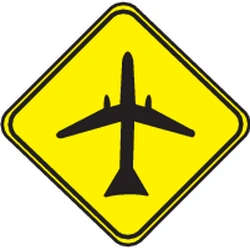
Warning for low-flying aircrafts.
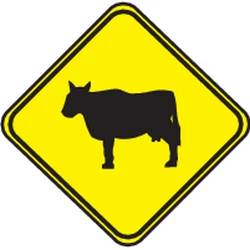
Warning for cattle on the road.
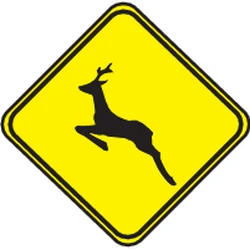
Warning for crossing deer.
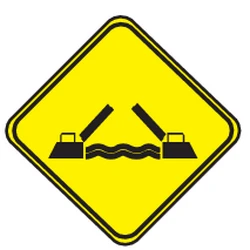
Warning for a movable bridge.
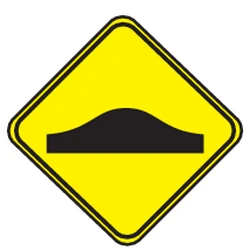
Warning for a speed bump.
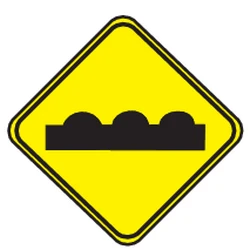
Warning for a bad road surface.
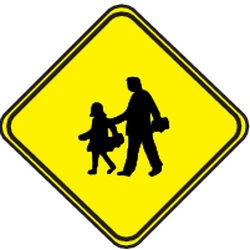
Warning for children.
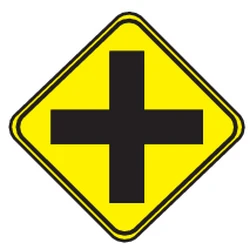
Warning for an uncontrolled crossroad.
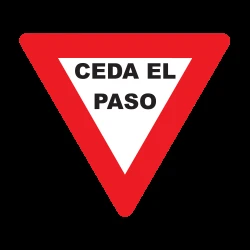
Give way to all drivers.
Warning for an uncontrolled crossroad with a road from the right.
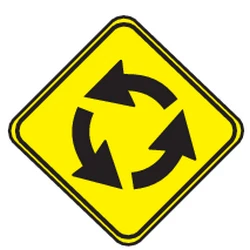
Warning for a roundabout.
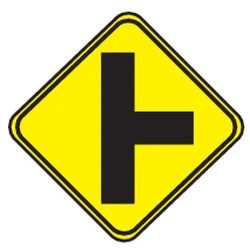
Warning for a crossroad with a sharp side road on the right.
Driving Rules & Safety Guidelines for Learners in Uruguay
Essential road rules, traffic signs, and safe-driving habits to support theory exam preparation and confident driving.
Categories
Trafficf rules uruguay
Trafficf rules uruguay
Use of public roads
Roadways are for vehicle use. Exceptionally, they may be used by pedestrians and animals in accordance with established chapters.
Sidewalks are for pedestrian use. Exceptionally, they may be used by vehicles to cross them.
Shoulders may only be used by vehicles with caution for emergency traffic and stops of equal importance. Pedestrians may use them to walk facing the direction of traffic when there are no other passable and safer areas.
Unpaved strips alongside paved roads, excluding shoulders, may be used for the transit of animals including horses. They may also occasionally be used by pedestrians and vehicles.
Unpaved roads are for the use of pedestrians, vehicles and animals.
Competitions cannot be established on traffic routes released for public use. However, the Ministry of Transport and Public Works or the corresponding Municipal Authority, with the approval of the Ministry of the Interior, may authorize pedestrian, bicycle or regularity races. Municipal Intendancies may authorize the holding of sporting events on suitable circuits removed from general circulation.
The competent authority may temporarily depart from the road use rules, expanding or restricting the use of public roads, taking into account reasons of convenience and user security.
The Ministry of Transport and Public Works and the corresponding Municipal Intendancy may establish limitations on the use, circulation or parking of pedestrians, vehicles and animals on roads within their jurisdictions.
Drivers
No person may drive mechanically propelled vehicles unless authorized by the competent authority. Only the vehicles specified in the authorization may be driven, and these authorizations are issued in the form of licenses.
The Ministry of Transport and Public Works, at the proposal of the Permanent Advisory Commission, will establish the mental and physical aptitude requirements and the practical and theoretical knowledge about traffic that each person must demonstrate to aspire to a driver's license or its renewal.
Disabled persons may obtain special authorization to drive a vehicle suitable for traffic and appropriate to their physical capabilities.
All prospective drivers must apply for a license at the Municipal Intendancy corresponding to their address.
Applicants for a driver's license may be authorized to undertake apprenticeship in the manner and places established by the corresponding Municipal Authority. Every instructor must be at least 21 years of age and hold a driver's license of the corresponding category with a minimum of two years of seniority.
The Ministry of Transport and Public Works may regulate the operation of driving schools.
License 1 is for amateur drivers and has two grades. Grade A is for driving cars with up to 9 passengers including the driver and vehicles with a load capacity of up to 1,000 kg, able to tow up to 450 kg in total, with a minimum age of 18 years. Grade B is for driving cars and trucks up to 4,000 kg of load, able to tow a trailer provided that total limits of 4,000 kg are not exceeded, with a minimum age of 19 years.
License 2 is for professional drivers and has five grades. Grade A is for driving cars with up to 9 passengers and vehicles with a load capacity of up to 1,000 kg, able to tow up to 450 kg, with a minimum age of 18 years. Grade B is for driving cars and trucks up to 7,000 kg of load with a minimum age of 19 years and 1 year of seniority with another license. Grade C is for driving cars and trucks of all types with a minimum age of 23 years and 3 years of seniority with another license. Grade D is for driving taxis, cars up to 9 passengers and vehicles up to 1,000 kg load capacity with a minimum age of 21 years and 2 years of seniority with another license. Grade E is for driving cars and trucks up to 7,000 kg of load, able to tow a trailer not exceeding 4,000 kg total, and buses with 9 or more passengers, with a minimum age of 23 years and 3 years of seniority with another license.
License 3 is for driving motorcycles with a minimum age of 18 years. Drivers may operate mopeds up to 50cc engine capacity from 16 years of age as regulated.
License 4 is officially issued to members of the Armed Forces, police forces, and inspection personnel related to traffic. It is graded in the same way as License 2 except for Grade D. For driving motorcycles, License 4-F is issued.
Each Municipal Authority may require additional examinations for holders of driver's licenses with national validity in order to enable them to drive motor vehicles for urban public passenger transport, taximeters, school transport and other public services within their jurisdiction.
The first license granted to a driver is valid for two years and is of a precarious nature. Renewals in the same or other categories are for periods of up to ten years. From sixty years of age, renewal periods are up to five years until a maximum of seventy years of age, and up to three years maximum for ages over seventy. The Ministry of Transport and Public Works may establish maximum ages for different license categories.
In special cases involving vehicles with different characteristics from those commonly in use, the competent authority may issue special provisional permits to persons who demonstrate competence in their handling.
Valid licenses issued by other countries may be recognized within a period of one year from the last entry into the country by the holder, without prejudice to the provisions of agreements to which Uruguay is a party. Diplomatic officials accredited to the Government of the Republic may be authorized to drive by simply presenting the license from any country with which reciprocity exists, certified by the Ministry of Foreign Affairs. Family members of diplomatic officials may be authorized to drive in accordance with the corresponding franchises.
The Ministry of Transport and Public Works will organize a National Driver Registry to centralize and process information about drivers. Each driver may obtain information corresponding to their own records.
Every licensed driver is obliged to report any change of address to the competent authorities within fifteen working days.
Drivers must carry documents that prove their authorization to drive as well as the vehicle registration, and must display them when required by the competent authority. If driving a special vehicle or under special conditions, the corresponding circulation permit must also be carried. Public service providers may carry authenticated photocopies of vehicle documentation.
Drivers must at all times be physically and psychologically fit to drive safely and efficiently. Driving any kind of vehicle while in a state of intoxication or under the influence of drugs or any psychotropic drug that can inhibit or incapacitate driving safely, even temporarily, is prohibited.
Drivers must respect established signs as well as the instructions of personnel authorized for traffic inspection. In particular, they must stop immediately when required by such personnel.
Vehicles or animals may not be driven recklessly or negligently.
Repairing vehicles on public roads is prohibited except in emergency situations, for the shortest possible time and off the vehicular traffic lane.
Fuel may not be loaded into a vehicle with the engine running.
Drivers must exercise care and attention to avoid accidents in the case of pedestrians who invade the roadway, especially when dealing with children or people who are clearly confused or disabled.
Vehicles
The Ministry of Transport and Public Works will organize a National Vehicle Registry to centralize and process information about vehicles.
Every vehicle, whatever its category, must be registered by the Municipal Authority corresponding to the owner's address. Any modification in ownership, the owner's address, structural characteristics, use, or any other data required by regulations must be registered with the competent municipal authority.
The Ministry of Transport and Public Works will coordinate with Municipal Authorities the forms and deadlines for supplying the information required by the National Registry.
The total width of a vehicle including load and attachments may not exceed two metres and fifty centimetres. Buses providing long-distance, international or national services may have a total width of up to two metres and sixty centimetres.
The height of vehicles including load and attachments may not exceed four metres measured from the surface of the pavement.
Single vehicles may have a maximum length including load and attachments of twelve metres. Buses providing long-distance, international or national services may have a maximum length of up to thirteen metres and twenty centimetres. Vehicle combinations consisting of a tractor truck and a semi-trailer may have a maximum length of sixteen metres and fifty centimetres. Vehicle trains consisting of a truck and a trailer may have a maximum total length of twenty metres.
Motor vehicles, trailers or semi-trailers may not have any part protruding more than one metre and sixty centimetres in front of the front axle, except for buses where that projection may be up to two metres and fifty centimetres. Simple vehicles may not have any part behind the last axle exceeding thirty percent of their total length, nor any protrusions outside the fenders, with rearview mirrors excepted.
The competent authority may establish lower limits than those established for circulation on certain routes.
When the dimensions of vehicles exceed the indicated limits without proper authorization, the driver is obliged to remove the vehicle immediately once the fact has been verified, in the manner indicated by the intervening authority, without prejudice to any applicable sanctions.
Motor vehicles with more than two wheels must be equipped with two main front headlights that emit a white or selectively yellow light, placed symmetrically at the same level, one on each side of the front of the vehicle, at a height no greater than one metre and forty centimetres nor less than sixty centimetres. These headlights must allow selection between low beam, which must allow seeing persons, vehicles and obstacles at a distance of no less than thirty metres at night without dazzling others, and high beam, which must allow seeing persons, vehicles and obstacles at a distance of no less than one hundred metres at night. A dashboard indicator must be on whenever the high beam is in use.
Motor vehicles with more than two wheels must have at least two front lamps emitting a clearly visible white position light from three hundred metres ahead. Motor vehicles, semi-trailers and trailers must be equipped with at least two rear lamps emitting a red position light clearly visible from three hundred metres behind. In vehicle combinations, only the rear lights of the last vehicle need to be visible. All required lights must be mounted symmetrically. One of the rear lamps must illuminate the rear license plate with white light clearly visible from twenty metres.
Motor vehicles with more than two wheels, semi-trailers and trailers must have at the rear two or more red reflective devices placed symmetrically at a height of no less than thirty-five centimetres and no more than one metre and fifty centimetres, visible at night from a minimum distance of one hundred and fifty metres when high beam is projected onto them.
Motor vehicles with more than two wheels, semi-trailers and trailers must be equipped with an even number of symmetrically placed brake indicator lamps that emit red light when brakes are applied, visible under normal sunlight from at least one hundred metres behind.
Motor vehicles with more than two wheels, semi-trailers and trailers must be equipped with front and rear indicator lights using flashing lights to indicate intention to turn, change lane or overtake. Front lights must emit white or amber light and rear lights must emit red or amber light. Under sunlight these lights must be visible from at least one hundred metres.
Vehicles two metres or more in total width must additionally be equipped with two front clearance lamps, three front identification lamps, two rear clearance lamps, three rear identification lamps, two side marker lamps on each side, two side reflectors on each side, and two rear clearance reflectors.
Identification lamps must be grouped in a horizontal row, spaced at a distance of no less than fifteen centimetres and no more than thirty centimetres, and mounted symmetrically on the permanent structure of the vehicle.
Front clearance and identification lamps, side marker lights and reflective devices mounted on the front or sides near the front must emit or reflect amber colour. Rear clearance and identification lamps, side marker lamps and reflective devices mounted on the rear or sides near the rear must emit or reflect red colour. All lighting and reflector devices mounted on the rear must emit or reflect red light, except indicator devices which may be amber, the license plate light, and the reverse indicator lamp which must be white.
Vehicle combinations or trains exceeding twelve metres in length must have amber lights on their sides placed at a distance of three metres from each other at a height no greater than one metre and fifty centimetres. In a combined vehicle, lights obstructed by another vehicle in the combination need not be switched on.
When the load of any vehicle protrudes more than fifty centimetres from its rear end, during daylight hours two square red pennants of no less than forty centimetres on each side must be placed at each end of the most protruding part. During the night, two red reflectors and two lamps emitting red light visible from no less than fifty metres must be placed in a similar manner.
Motor vehicles with more than two wheels may additionally be equipped with two symmetrical front fog lights at a height of no less than thirty centimetres nor greater than sixty-five centimetres, two complementary headlights positioned symmetrically, no more than one courtesy lamp on the running board emitting white or amber light, two reversing lamps, and flashing warning lamps emitting amber light visible from at least five hundred metres.
Motorcycles and scooters must be equipped with a main headlight capable of selecting two light emissions placed at the centre of the vehicle, two front turn signal lamps, two rear direction change indicator lamps, one or two rear red lamps, one or two rear red reflective devices, and a brake indicator lamp. Motorcycles and scooters must always have their low beam headlights on.
Mopeds must be equipped with a front headlight allowing sight of persons, vehicles and obstacles at a distance of no less than thirty metres. They must drive at all times with low beam headlights on. At the rear they must have a red light visible from sixty metres and a reflective material of the same colour.
Bicycles must carry at least one rear red reflective device. When driving during the hours when lights are mandatory, they must also carry a front white light headlight visible from at least one hundred metres.
Vehicles transporting flammable, explosive or other hazardous loads must bear two equilateral triangular red reflective material indicators of sixty centimetres on the outer side and seven centimetres wide at the rear, visible at night from one hundred metres. They must also have an equilateral triangular yellow reflective material indicator on the upper left side of the cabin with sides of thirty centimetres, visible at night from one hundred metres from the front.
During the night from half an hour after sunset until half an hour before dawn, as well as during the day when prevailing circumstances mean there may not be sufficient visibility, all vehicles in motion must have their required lights turned on. This includes low beam headlights permanently on unless high beam is used, high beam only on roads and highways if no vehicle is travelling in the opposite direction whose driver may be blinded, front and rear position lights, and clearance, demarcation, identification and side lamps when required.
Vehicles parked on public roads during the hours and circumstances established in the previous article must have parking lights or position lights on unless the road is sufficiently illuminated.
Cargo vehicles with a capacity exceeding one thousand five hundred kilograms, freight trains and public passenger transport vehicles must be equipped with two authorised beacons. The remaining motor vehicles over two wheels must be equipped with at least one authorised beacon. When a vehicle is stopped on the roadway over a traffic lane due to force majeure, two regulation beacons must be placed fifty metres from the front and rear respectively on roads and highways, and fifteen metres in urban and suburban areas with insufficient lighting. Beacons must be clearly visible from a distance of no less than one hundred and fifty metres at night under normal conditions.
Vehicles assigned to police services, firefighting or health assistance must carry a flashing or rotating light with regulatory characteristics to indicate their presence when driving in an emergency. Machinery used for signalling, repair, cleaning or road maintenance must indicate its presence with an intermittent or rotating light with regulatory characteristics if its location on the roadway requires special precautions for other users.
Motor vehicles, semi-trailers, trailers or combinations travelling on public roads must be equipped with brakes that can be easily operated by the driver from their seat. These brakes must be kept in good working order, adjusted to act uniformly on all wheels.
Motor vehicles must carry service brakes that allow the vehicle to slow down and immobilize it safely, quickly and effectively under all load conditions, bringing the vehicle to a complete stop within twelve metres at most when travelling at forty kilometres per hour on horizontal, smooth, dry and clean pavement. They must also carry parking and emergency brakes that allow maintaining the vehicle stationary on a ten percent slope, engaging at a minimum on one wheel on each side of the vehicle and functioning through purely mechanical action. Parking brakes must be independent of service brakes.
Semi-trailers and trailers must carry service brakes acting on all wheels, triggered by the service brake control of the tractor vehicle, and equipped with a security device that automatically stops them in case of coupling device breakage. They must also have parking brakes meeting the required standards.
Trailers with a gross total weight of less than seven hundred and fifty kilograms must be equipped with service brakes but may be exempt from the automatic braking device upon accidental disengagement. When the trailer attached to a light vehicle does not exceed fifty percent of the weight of the tractor vehicle, it may lack service brakes.
In combinations or trains of vehicles, braking devices and systems must be compatible, the action of service brakes must be appropriately synchronized and distributed among the vehicles, service brakes must be operated by the tractor vehicle's service brake control, and towed vehicles must be equipped with brakes that apply automatically and continue to be applied for at least fifteen minutes in the event of detachment from the tractor vehicle.
Motorcycles and scooters must be equipped with two braking devices, one acting on the rear wheel and the other on the front wheel, allowing the vehicle to slow down or immobilize it safely, quickly and effectively under all load conditions.
Vehicles not referred to in this chapter must be provided with at least one braking system.
Vehicles using compressed air for operation of their brakes must be equipped with an audible or visible warning signal to the driver that activates when the air tank pressure falls below fifty percent of the pressure given by the compressor regulator. They must also be equipped with a pressure gauge visible to the driver indicating available braking pressure.
Motor vehicles circulating on public roads must be equipped with a horn in good working order capable of producing a uniform sound of adequate intensity and pitch, audible at a distance of no less than one hundred metres under normal conditions. The use of sound devices such as sirens, whistles or bells is prohibited, with the exception of emergency vehicles.
The use of the horn is generally prohibited. It is only permitted justifiably to avoid accidents and in situations provided for in the regulations.
Motor vehicles must be powered by an engine with power and characteristics appropriate to the total weight and other elements of the vehicle. Motor vehicles must not emit noises that disturb other road users or frontage, and must be equipped with a silencing device in good working order that cannot be disconnected or reduced in its effectiveness by the driver.
Motor vehicles must not exceed the maximum regulatory emission standards set by the authority so as not to disturb the population or compromise their health and security.
Fuel supply systems must be such as to prevent spills or leaks. The tank and its opening must be outside the enclosure of the driver and passengers.
Motor vehicles with more than two wheels must have a reverse gear motor system.
Vehicles must have adequate suspension systems that reduce damage to the road, contribute to good stability, and provide proper cushioning of movements caused by road surface irregularities.
Motor vehicles, semi-trailers and trailers must have mudguards with characteristics that minimize the projection and dispersion of dust, liquid, mud or stones.
Motor vehicles, semi-trailers, trailers and bicycles must have pneumatic tyres that guarantee vehicle safety. Tyres must provide proper grip on the pavement even when wet, inflated to adequate pressure not exceeding the maximums specified by the manufacturer and regulations. Tyres must have a standardised wear indicator, and if they do not have one, they cannot be used when the tread depth is less than regulated. Motor vehicles with more than two wheels must also carry an auxiliary wheel in a condition that can replace the others when damaged.
Industrially retreaded tyres may only be used under conditions that are regulated.
Vehicles with a gross load of less than five hundred kilograms that cannot develop speeds greater than fifteen kilometres per hour may circulate with metal tyre treads provided they do not contain protruding nails or points. Agricultural and road machinery with metal wheeling may only circulate with authorization from the competent authority, provided measures are adopted to minimize pavement damage.
The design of engine compartment covers and luggage compartments must be such as to prevent their accidental opening during movement.
Motor vehicles with more than two wheels must have front and rear bumpers whose design, construction and assembly reduce the effects of impacts as regulated. Semi-trailers and trailers must have rear bumpers of similar characteristics.
Motor vehicles with more than two wheels must have two license plates with the vehicle's registration number, one placed at the centre of the front and the other at the rear. License plates must be uniform throughout the country in a rectangular shape. Two-wheeled vehicles, semi-trailers or trailers must have a plate with the registration number placed on the back. Plates must be placed and maintained so that their features are easily visible.
Vehicles must not have external protruding elements or breaks that increase danger in collisions or friction. Internally, they must have adequate padding with minimal hazard protrusions, knobs and commands.
Steering elements must offer maximum guarantees. The steering wheel must allow the driver to safely control the trajectory of the moving vehicle under any circumstances, requiring normal effort and returning automatically to the straight-path position once effort has ceased.
Motor vehicles must be equipped with at least one flat rearview mirror allowing the driver to see by reflection what is behind them. Cars must have two mirrors, one inside the cabin and one external on the steering wheel side. Buses, trucks and tractors must have two rearview mirrors, one on each side of the vehicle, not protruding more than fifteen centimetres beyond the width of the body, and must be articulated so they can be folded within the width of the vehicle.
Transparent elements constituting the exterior part of a vehicle and interior partition walls must be of characteristics such that in case of breakage, the danger of bodily injury is reduced to the minimum possible. Windshield glass must have transparency that does not change over time and does not distort or cancel vision of objects. Vehicles may not carry non-transparent signs or materials, or materials that modify transparency, on windshields, side or rear windows, except as authorized or arranged by the competent authority.
Motor vehicles with more than two wheels must be equipped with a windshield wiper operated by the driver with operation independent of the vehicle's movement.
Motor vehicles with more than two wheels must have at least one hinged door on each side, whether hinged at the top or front, or of the sliding type. Openings without doors are prohibited except for authorized special vehicles. Every door adjacent to a seat must have a security lock.
The driver and passenger compartment must be adequately resistant and airtight, and must have seats with backrests properly anchored, folding and rotating front visors to protect the driver's view, an interior light with a manual switch, and seat belts and head restraints in the cases and conditions regulated.
Motor vehicles must have control elements positioned conveniently for the driver. In vehicles with more than two wheels, the control must be on the left side. The dashboard with indicators must be easily visible and have at a minimum a speedometer in kilometres per hour, a non-retrograde odometer, a turn signal indicator and a high beam indicator in good working order.
Motor vehicles for cargo and buses intended for passenger transport must be equipped with fire extinguishers of regulatory characteristics and capacity.
Pedestrian Circulation
Pedestrians must walk on the sidewalks in an orderly fashion, without causing annoyance or disturbance to other users, and without transporting packages or animals that cause disturbance or risk to others. This applies equally when pedestrians are walking along the shoulders.
Pedestrians may use bridges by walking along their paths or areas designated for that purpose. In the absence of such areas, they may do so along the edge of the roadway facing vehicular traffic.
Pedestrian traffic may not be obstructed or hindered with packages, installations or merchandise unless expressly authorized.
Pedestrians may use the roadway only to access or leave vehicles when prevented from doing so directly from the sidewalk or shoulder, to cross it as quickly as possible at marked pedestrian crossings or at intersections from one corner towards the other parallel to one of the lanes, or on roads and paths without pedestrian crossings or nearby intersections perpendicular to the axis in places of clear visibility after ensuring there is no danger. Pedestrians may also circulate with caution in single file close to the edge of the roadway in the opposite direction to the flow of traffic when there is no walkable sidewalk or shoulder, and when using wheeled vehicles to transport objects causing inconveniences on the sidewalk, during daytime hours, close to the edge in the direction of vehicular traffic.
No pedestrian may suddenly enter the roadway.
Pedestrians using the roadway are obliged to quickly move to sidewalks, shelters or edges of the road when they perceive the signals of emergency vehicles.
Vehicle Traffic
Vehicles must travel on the right half of the roadway open to traffic, except when the roadway is not wide enough, when overtaking another user travelling in the same direction and the road width does not allow it without crossing the centre, when there is an obstacle forcing driving on the left side while giving right of way to vehicles travelling in the opposite direction, and on roads with one-way traffic.
On all roads, vehicles must circulate within one lane. They may not do so by depriving another vehicle of part of the lane even if it involves two-wheeled motor vehicles.
When there is more than one traffic lane in the same direction, lane changes may only be made when the manoeuvre is safe, justified and does not disturb other users, and the corresponding indicator signal must be given before the change. Vehicles travelling at a speed no higher than the average must travel on the right-hand lane except when overtaking or turning left.
Vehicles must travel on the right half on two-way roads, approaching the right edge when signage requires it, when the driver's view is limited by hills, curves, fog or other elements, when approaching or passing through level crossings and tunnels, and when accessing an intersection except in rural areas when access is by a dirt or improved road.
Vehicles travelling in opposite directions must pass one another, each keeping to the right and not occupying the left half of the roadway open to traffic, even on narrow roads.
The competent authority may establish one-way traffic flow on public roads and drivers are required to respect them without exception.
Traffic around roundabouts will be by the right, leaving the obstacle to the left, unless there are regulating devices.
It is forbidden to drive over lane markings, separator lines or channelling islands.
A vehicle travelling behind another must maintain a safe distance that guarantees timely stopping when the vehicle ahead unexpectedly reduces speed. On roads and highways, this space must also be sufficient for a third vehicle attempting to overtake to occupy it without danger, except in cases of congestion.
Following emergency vehicles is prohibited.
Travelling in convoys is prohibited except for military and police vehicles, funeral processions and authorized caravans.
Drivers of vehicles as well as animals must drive with prudence and attention, being at all times in control of the movement of the same. They are required to drive at prudent speeds according to places and circumstances to avoid accidents and damages.
On roads and highways outside urban and suburban areas, the maximum speed under optimal driving conditions is ninety kilometres per hour for light vehicles without a trailer and authorised buses, and eighty kilometres per hour for the remaining vehicles. These speeds are reduced to sixty kilometres per hour in the vicinity of danger warning signs without maximum speed indication and when driving with low or medium beam headlights. Speeds are reduced to forty kilometres per hour in the vicinity of railway level crossings with barriers, intersections or other places without good visibility, marked pedestrian crossings, curves marked with a right angle, and buses stopped for passengers to get on or off.
In urban and suburban areas, the general maximum speed limit is forty-five kilometres per hour. The competent departmental authority may set maximum speeds of sixty kilometres per hour expressly indicated. On suitable roads with two or more traffic lanes in each direction, non-crossable central divider and regulated or protected crossings, the competent departmental authority may exceptionally authorise maximum speeds of up to seventy-five kilometres per hour for light vehicles without trailers.
The Ministry of Transport and Public Works may authorise, on roads or sections of suitable characteristics, speeds higher than those established in the general outside-urban-area limit, not exceeding one hundred and ten kilometres per hour for light vehicles without a trailer, with appropriate signposting.
A vehicle may not be driven at such a low speed as to obstruct or impede the normal flow of traffic. The competent authority may set minimum speeds on roads with special characteristics.
Every driver must avoid abruptly reducing the speed of their vehicle unless safety reasons require it.
Vehicles entering or leaving the public road must proceed at walking speed, avoiding inconvenience or risks to other users.
Animal-drawn vehicles must not travel at a speed greater than that of a normal trot. At intersections, level crossings and bridges, they must proceed at a walking pace. Riders may cross at a maximum moderate gallop except at intersections, level crossings and bridges where they must do so at a trot if possible and otherwise at a walk.
The driver of a vehicle following another on a two-lane, two-way road must overtake using the left side of the road, subject to rules including overtaking on the left of the vehicle being overtaken when the view is clear and that side is clear for the stretch necessary to safely complete the manoeuvre, making the required indicator signals, not disrupting the movement of other road users, ensuring that another vehicle behind has not initiated the same manoeuvre, and in rural areas warning other drivers with the horn during the day or headlight signals at night before starting the manoeuvre.
The driver of the vehicle being overtaken must approach the right edge of the road and not increase speed until the overtaking vehicle has completed the manoeuvre. On narrow roads, each driver is obliged to yield halfway. Heavy truck drivers and other vehicle trains must slow down and move aside when a vehicle attempts to overtake.
Overtaking by encroaching on shoulders or other areas not specifically for vehicular traffic is prohibited. On two-way roads with traffic in both directions, overtaking using the left half of the road is prohibited on capes with poor visibility, on slopes near their summit, entering a curve to the right, on bridges, tunnels and level crossings, and where there is a continuous yellow stripe or other signage preventing it. Overtaking is not permitted at intersections unless there is more than one lane in the same direction and a traffic officer or traffic light is giving the right of way. In rural areas, intersections are not considered when roads access a highway from a dirt or improved road.
On roads with more than one traffic lane in the same direction, overtaking on the right is only permitted when vehicles in the left lane reduce speed due to traffic contingencies. On two-way roads, overtaking by invading the opposite direction of traffic is prohibited. When a vehicle stops or slows down next to a pedestrian crossing, another vehicle approaching it may not overtake it unless a traffic officer or traffic light enables it or, after stopping, the driver confirms the crossing is not occupied by pedestrians.
When the path of one vehicle intersects with that of another road user, the driver must yield the right of way by reasonably reducing speed and stopping if necessary, without encroaching on the intersection, to allow passage of the other user without disturbing normal operation.
At an unmarked intersection of roads of similar importance, each driver will give right of way to the vehicle appearing on their right.
The competent authority may establish right of way using 'STOP' or 'YIELD' signs. A driver encountering a 'STOP' sign must necessarily stop their vehicle next to it and give right of way to other users. The driver encountering a 'YIELD' sign is obliged to give right of way.
At intersections regulated by traffic officers or illuminated signs, right of way will be given by these. Traffic officers adjust behaviour according to general rules: both arms raised forces all traffic to stop except emergency vehicles; a raised arm forces the person facing it to stop; facing forward or backward with arms down or raised forces those facing them to stop; a circular or back-to-front arm motion forces those in that line to continue; a profile position with arms down or low arm allows continuing or turning right; and a profile position with arm indicating allows turning left.
Light signals may consist of up to three colour lights. A solid red light means no passage is allowed. A flashing red light means vehicles must stop immediately and the right to proceed is subject to the rules for a 'STOP' sign. A red arrow impedes traffic in the direction and direction of the arrow. A continuous amber light requires those facing it to clear the crossing, announcing the imminent appearance of the red light. A flashing amber light means the vehicle may proceed only with caution. A green light allows overtaking of the vehicle facing it as well as turning right, and on one-way streets also allows turning left. A green arrow allows overtaking for those facing it according to the direction and direction of the arrow. For pedestrian crossings, white allows crossing and orange prohibits crossing.
In rural areas, the driver of a vehicle approaching an unmarked intersection with a road of greater importance from a secondary road will give priority to vehicles appearing on the right of the latter.
From the moment a vehicle begins crossing an intersection using their right of way, they keep it in front of other vehicles that then approach.
The vehicle that changes direction or direction of travel must give way to others.
The vehicle entering or leaving the public roadway must give priority of passage to other users.
The driver must give right of way to pedestrians crossing the road at all marked pedestrian crossings not directed by agents or traffic lights, and at intersections in urban and suburban areas.
In roundabout traffic, drivers upon exiting must give right of way to vehicles advancing on their right.
Vehicles must give right of way to emergency vehicles when they emit the required audible and visual signals, positioning themselves immediately as close as possible to the right edge of the roadway outside of intersections, stopping if necessary.
To turn right, every driver must first position themselves in the right-hand traffic lane, make mandatory turn signals, enter the new road via the right lane open to traffic, reduce speed, and yield the pass to other users.
To turn left, every driver must first position themselves in the left lane of traffic in their direction of travel, make the required turn signals, enter the new lane in the leftmost circulation lane in their direction of travel, reduce speed, and give way to other users.
At specially designed and properly signposted intersections, the competent authority may establish specific routes for turns and may authorise turns in more than one lane.
The reversal of direction of travel may only be carried out at intersections without regulatory signs unless the competent authority expressly authorises it. The driver must stop before entering the intersection, ensuring it is free of users and will not be occupied during the time needed to perform the continuous manoeuvre without going back. When intersections are far apart, the manoeuvre may be performed in places of clear visibility offering necessary security.
Before turning, changing lanes, significantly reducing speed, or starting a journey, drivers must first ensure they can do so without disrupting normal flow. They must give left turn signals for turning or changing lanes to the left, right turn signals for turning or changing lanes to the right, and arm and hand extended downwards to significantly reduce speed. Making incorrect signals or signals that do not correspond to vehicle movement is prohibited.
The circulation of vehicles that due to their characteristics or loads cannot conform to the requirements of the regulations may be authorized in each case on an exceptional basis by the competent authority, only in duly justified cases and provided necessary precautions are taken. Such authorization does not exempt the beneficiary from liability for damages caused.
Reversing may only be carried out in strictly necessary cases and in circumstances that do not disturb other road users.
The towing of motor vehicles may only be done by strict necessity, without creating difficulties or danger to other users and under conditions that offer adequate safety. Only one person will be allowed in a towed vehicle.
No one may travel in trailers and towed caravans when circulating on public roads.
On roads with mixed traffic, drivers must give right of way to livestock. When travelling in the opposite direction, they must stop until the cattle crossing ends. When travelling in the same direction, they may only overtake by adopting maximum precautions. Drovers will facilitate the manoeuvres by laying the animals to one side of the road.
In urban and suburban areas, the stopping of vehicles for passenger boarding and alighting and parking on the roadway are permitted when they do not pose danger or disruption to circulation. They must be carried out in the direction corresponding to the flow of traffic, no more than twenty centimetres from the curb or the edge of the sidewalk pavement and parallel to them. The competent authority may establish other forms of parking through appropriate signage.
In urban and suburban areas, stopping or parking is prohibited next to another parked vehicle forming a double row, within an intersection leaving at least up to the beginning of the building line parallel to circulation, at marked pedestrian crossings, on bridges, viaducts, tunnels, railway level crossings and in their vicinity, on curves or gradients with reduced visibility, within ten metres before a 'STOP', 'YIELD' or warning sign, at public transport or taximeter stops, in front of vehicle entrances to buildings except those expressly authorized, and next to central flowerbeds and islands or separating shelters of transit.
On roads and highways, stopping or parking is prohibited on the roadway and shoulders. In emergency situations, temporary stopping on the shoulders is permitted in places far from bridges, viaducts, tunnels, culverts, intersections, railway level crossings, pedestrian crossings, curves, steep hilltops and any place of reduced visibility. The vehicle must be completely immobilized with brakes and wheel chocks if necessary, which must then be removed, and the vehicle must be marked according to regulations.
A stopped or parked vehicle may not be set in motion unless the manoeuvre can be carried out safely without disturbing circulation of other users and making the required signals.
Vehicle doors may only be opened when properly parked or stopped, and those on the sidewalk or shoulder side must be used unless there is a justified impediment. In the latter case, they may be opened under the driver's responsibility and for the strictly necessary time.
Public service buses must stop at established places. The competent authority must ensure such places are outside of traffic lanes.
All parked vehicles must be locked with the engine stopped, without the ignition key, with the handbrake engaged. If there is a slope, the front wheels must rest on the sidewalk curb if one exists at a suitable angle, and if not, the vehicle must be immobilized with chocks which must then be removed.
The loading and unloading of goods is only permitted on public roads when it is not possible to carry them out elsewhere, provided they do not obstruct vehicular or pedestrian traffic.
The competent authority will establish limitations or prohibitions to park when circumstances require, and may have spaces for stopping or parking with specific destinations. The competent authority may require the removal of illegally parked vehicles or have them towed at the owners' expense, without prejudice to corresponding penalties.
Drivers approaching a railway level crossing without barriers must stop before crossing the tracks. If there is no audible or visual signal preventing it, they may restart and proceed with caution after verifying that no train is approaching. For passenger buses or trucks carrying passengers in their boxes, a guard, responsible person or one of the occupants must get out and make sure there is no danger before crossing.
Drivers are not allowed to enter a railway level crossing with barriers when these are lowered or moving into descent. If the barriers are completely lifted and there is no audible or visual signal preventing it, drivers may enter the level crossing after ensuring no train is approaching.
After complying with the established precautions, drivers must cross railway level crossings at a steady pace that does not require making gear changes.
The driver of an authorized emergency vehicle moving for strictly urgent reasons, sending clear luminous and acoustic identification signals, may under their responsibility exceed Speed Limits within reasonable margins that do not pose risks to general safety, not respect priorities and signage while reducing speed and ensuring there are no risks of accident at red traffic lights, 'STOP' or 'YIELD' signs, and not respect parking prohibitions.
The prerogatives established for emergency vehicles do not relieve their drivers of the obligation to drive with due caution so as not to compromise the safety of other users of the public road or cause harm.
Drivers of motorcycles, scooters, mopeds and bicycles have the same obligations and rights as other drivers of vehicles, except those that by their nature are not applicable.
Drivers of motorcycles, scooters, mopeds and bicycles must be properly seated in their seats with full control of the driving mechanisms, may only carry a passenger when the vehicle is equipped for more than one person seated, are prohibited from carrying loads that affect normal and safe driving, cannot tow a trailer unless the vehicle is expressly enabled to do so, and are prohibited from travelling while holding or attached to another vehicle, as well as their companions.
How Driving Licences Work in Uruguay (PUNC, Intendencia Process, Theory & Practical Exams)
When you start understanding the licence process then learning driving theory will be easier for you. In Uruguay, the system is framed by the Permiso Único Nacional de Conducir (PUNC), and UNASEV’s official PUNC page provides national guidance and material for preparing theoretical driving exams.
In practice, first-time licence applications are handled through your local Intendencia / municipal traffic office (for example, Montevideo, Canelones, Salto, etc.), and the process commonly includes document review, a theory exam, and a practical exam. Montevideo’s official licence process page explicitly shows that after documentation approval, the theory exam is scheduled, and after passing theory, the practical exam is scheduled.
This page helps you prepare in a practical way: practise Uruguay theory-test questions with explanations, study Uruguayan traffic signs, and review common rules that appear in the exam.
Types of Driving Licence in Uruguay
Uruguay uses categories under the PUNC framework, and local Intendencias publish category-specific procedures. Official municipal pages commonly show categories such as:
A (common private car category in many Intendencia procedures).
G1 / G2 (motorcycle-related categories shown in municipal procedures).
Additional professional / heavier vehicle categories depending on the local office and applicant type.
If you are applying for a first private car licence, confirm the exact category name used by your Intendencia (many municipalities use Category A for standard car licences).
Minimum Age and Eligibility
Requirements vary by category and Intendencia, but local official pages show common first-time requirements such as:
Minimum age (for many common car-category first licences, often 18+)
Valid identity document
Psychophysical / medical fitness certificate.
No disqualifying restrictions (for example, active sanctions in some municipal rules)
For example, the official Canelones first-time licence page lists a general age requirement of 18+, identity documents, no pending fines, no active disqualification, a psychophysical fitness certificate, and prior appointment booking.
Because these rules can differ by category and municipality, always verify the latest local requirements before booking.
Documents Commonly Required for a First Driving Licence
Exact lists vary by Intendencia, but official local pages commonly require:
Valid identity document (cédula / passport, depending on case)
Psychophysical / medical fitness certificate (from authorized institutions)
Appointment booking confirmation
Proof of payment / fees (where applicable)
Other category-specific documents (depending on first issue, renewal, age group, or licence type)
Tip: Always check your specific Intendencia’s current checklist before your appointment, since requirements and scheduling rules are local.
Typical Application Steps
A typical first-time process in Uruguay often looks like this:
Choose your Intendencia / municipal office and review the local requirements
Book an appointment (agenda previa), where required
Submit documents and complete required medical/psychophysical checks
Take the theory exam after documentation approval (as shown in official municipal workflows)
Take the practical exam after passing the theory exam
Complete issuance steps for the driving licence through your local office
This website supports the study part of that journey by helping you practise questions and learn signs before the theory exam.
Uruguay Theory Test Format
The exact format can vary by municipality, but the theory stage generally tests:
Traffic sign recognition
Road rules and priority / right-of-way
Safe driving behaviour
Road markings and signals
Basic regulatory knowledge for the licence category
UNASEV’s PUNC page specifically highlights that it provides material to prepare for theoretical driving exams, which supports the idea of a national study base with local administration.
Because timing, number of questions, and pass criteria may vary locally, confirm your Intendencia’s current exam format before test day.
Key Driving Rules to Study
If you want to focus on what commonly matters in Uruguay theory prep, prioritise:
Category-specific rules (car vs motorcycle vs professional)
If you are preparing for a motorcycle category (like G1/G2 in municipalities that use those categories), spend extra time on helmet and lane-positioning safety rules.
How to Prepare Effectively
If you are starting from scratch, a simple plan works well:
Day 1–2: Learn Uruguayan traffic signs by category
Day 3–4: Review key rules (priority, signals, markings, safety)
Day 5–7: Practise Uruguay driving theory questions and review explanations for every mistake
Avoid memorising answers. Focus on understanding why an option is correct. That helps with reworded questions and real driving situations.
Important Note on Official Sources
This site is not an official government website. For official procedures, appointments, fees, category requirements, and the latest updates, refer to UNASEV / PUNC guidance and your local Intendencia (municipal traffic/licence office). Official municipal pages (such as Montevideo and Canelones) publish local scheduling and licence process steps.
Frequently Asked Questions
Quick answers about Uruguay driving licence practice tests, traffic signs, and Intendencia application steps.
Answer: Uruguay uses the PUNC (Permiso Único Nacional de Conducir) framework, but first-time applications and exams are commonly handled by your local Intendencia / municipal traffic office, which manages appointments and local procedures.
Answer: No. This website is an independent educational resource and is not affiliated with any government or licensing authority. The questions are for learning and practise. For official procedures and requirements, check UNASEV/PUNC guidance and your Intendencia.
Answer: In official municipal workflows (for example, Montevideo), the practical exam is scheduled after passing the theory exam.
Answer: Common requirements on official municipal pages include an identity document, psychophysical/medical fitness certificate, and appointment booking requirements, plus category-specific items depending on the Intendencia. Always confirm your local checklist.
Answer: Learn road signs first, then focus on priority rules and signals/markings, then practise theory questions daily and review explanations carefully. Also verify your local Intendencia’s current exam format and appointment rules before test day.