
Austria Driving Licence Theory Test Practice, Road Signs
& Führerschein Guidance

Prepare for the Austria driving licence theory test (Führerschein) with practice questions, clear explanations, and road sign learning. Choose your federal state to focus on the most relevant study flow and local steps.

Independent educational resource. Not affiliated with any government or licensing authori

Select your Bundesland to start practicing theory questions and local test topics. You can switch anytime.
Burgenland
Salzburg

Austria Road Signs Guide

Road signs are a major part of theory learning in Austria. Start with sign categories (prohibitions, mandatory signs, priority signs), then Practice sign-based questions so you learn the meaning and the correct driving action.

If you want an official reference for how signs are defined, Austria’s road traffic law (StVO) lists sign types and examples.

Road Signs and Their Meanings

Warning for a danger with no specific traffic sign.
Warning for a danger with no specific traffic sign.

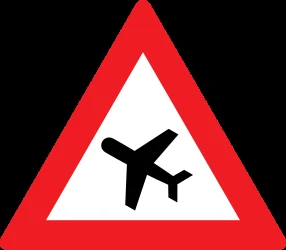
Warning for low-flying aircrafts.
Warning for low-flying aircrafts.

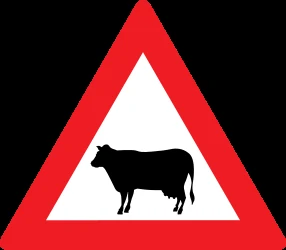
Warning for cattle on the road.
Warning for cattle on the road.

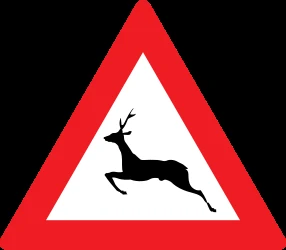
Warning for crossing deer.

Warning for crossing deer.

Warning for a bad road surface.
Warning for a bad road surface.

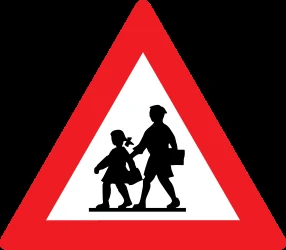
Warning for children.

Warning for children.

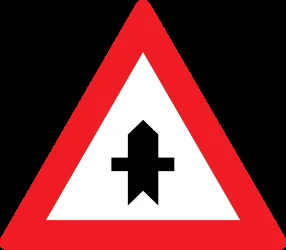
Warning for an uncontrolled crossroad.
Warning for an uncontrolled crossroad.

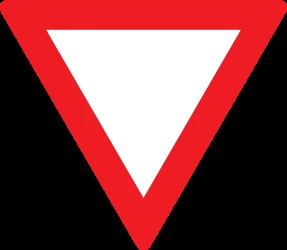
Give way to all drivers.

Give way to all drivers.

Warning for a roundabout.
Warning for a roundabout.

Warning for a crossroad side roads on the left and right.

Warning for a crossroad side roads on the left and right.

Stop and give way to all drivers.
Stop and give way to all drivers.

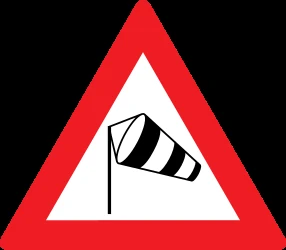
Warning for heavy crosswind.

Warning for heavy crosswind.

Driving Rules & Safety Guidelines for Learners in Austria

Clear driving rules, sign awareness, and safe-driving guidance to strengthen theory exam preparation.

Categories

The obligation to wear a seat belt
Poor driving conditions
Correct tyres
Mobile phone ban
The Emergency corridor
Conduct in an emergency
The obligation to wear a seat belt
Every person in a motor vehicle must wear a seat belt – whether they are driving, in the passenger seat or on the back seat. A seat belt helps in every accident and is essential for survival in severe cases. Please ensure consistent, different and correct securing of adults, pregnant persons, children, pets and the load in vehicles and do not forget to reach for your seat belt yourself, as well!
Poor weather conditions, such as frost, also mean worse road conditions. The speed must therefore always be adjusted and chosen carefully. Rain, snow and fog also lead to poor visibility. It is therefore necessary to: Reduce your speed, increase your distance, switch on your dipped headlights and hold the steering wheel with both hands. Vulnerable road users, such as those on a bicycle or on foot, can easily be overlooked or seen too late. At dawn and dusk, and at night, also pay particular attention to deer crossing, especially in rural areas. The rear fog lamp is only to be switched on at a visibility of less than 50 metres, as it otherwise blinds others. In queues of traffic and in fog-free sections, the rear fog lamp must be switched off in any event, in contrast to the front fog lamps.
Tyres must have a certain tread depth, which is at least four, five or six millimetres, depending on the type of vehicle and type of tyre. From 1 November until 15 April of the following year, there is a situational winter equipment obligation for drivers of cars and trucks up to 3.5 tons maximum permissible gross weight. This means that the drivers must have winter tyres fitted in this period in winter driving conditions.
For drivers of trucks over 3.5 tons maximum permissible gross weight and buses, winter tyres are mandatory. This means that the vehicle must always have winter tyres fitted in the specified period, regardless of whether or not there is snow on the road. This obligation applies for trucks over 3.5 tons from 1 November until 15 April and for buses from 1 November until 15 March.
For cars and trucks with a maximum permissible gross weight of no more than 3.5 tons, snow chains can be used as an alternative to winter tyres. The chains must be fitted on at least two drive wheels. This is, however, only permitted if the road is continuously or almost continuously covered with snow or ice.
Distraction is one of the main causes of accidents in Austria. For this reason, the mobile phone ban at the wheel was expanded. Talking on the phone while driving is only permitted with a hands-free system.
The emergency corridor is mandatory on the Austrian motorways and expressways. Drivers are obligated to form a lane when traffic is held up to allow emergency vehicles to pass through: in two-lane road sections in the middle, in three or four-lane road sections between the far left and the adjacent lane.
If an accident has occurred, all the parties involved face major challenges. The most commonplace things are often forgotten in the process. The Federal Ministry has designed small adhesive strips with the most important emergency numbers, for which space can easily be found on, for example, smartphones. The automatic vehicle emergency service “eCall” provides a Europe-wide emergency service for motor vehicles on the basis of the already existing European emergency telephone number 112.
In an emergency, every second counts. There is only one thing you can do wrong in first aid – to do nothing. The Federal Ministry has compiled a compact card for first aid, which provides information on the most important steps, precautions and emergency telephone numbers.
Poor driving conditions
Poor weather conditions, such as frost, also mean worse road conditions. The speed must therefore always be adjusted and chosen carefully. Rain, snow and fog also lead to poor visibility. It is therefore necessary to: Reduce your speed, increase your distance, switch on your dipped headlights and hold the steering wheel with both hands. Vulnerable road users, such as those on a bicycle or on foot, can easily be overlooked or seen too late. At dawn and dusk, and at night, also pay particular attention to deer crossing, especially in rural areas. The rear fog lamp is only to be switched on at a visibility of less than 50 metres, as it otherwise blinds others. In queues of traffic and in fog-free sections, the rear fog lamp must be switched off in any event, in contrast to the front fog lamps.
Tyres must have a certain tread depth, which is at least four, five or six millimetres, depending on the type of vehicle and type of tyre. From 1 November until 15 April of the following year, there is a situational winter equipment obligation for drivers of cars and trucks up to 3.5 tons maximum permissible gross weight. This means that the drivers must have winter tyres fitted in this period in winter driving conditions.
For drivers of trucks over 3.5 tons maximum permissible gross weight and buses, winter tyres are mandatory. This means that the vehicle must always have winter tyres fitted in the specified period, regardless of whether or not there is snow on the road. This obligation applies for trucks over 3.5 tons from 1 November until 15 April and for buses from 1 November until 15 March.
For cars and trucks with a maximum permissible gross weight of no more than 3.5 tons, snow chains can be used as an alternative to winter tyres. The chains must be fitted on at least two drive wheels. This is, however, only permitted if the road is continuously or almost continuously covered with snow or ice.
Distraction is one of the main causes of accidents in Austria. For this reason, the mobile phone ban at the wheel was expanded. Talking on the phone while driving is only permitted with a hands-free system.
The emergency corridor is mandatory on the Austrian motorways and expressways. Drivers are obligated to form a lane when traffic is held up to allow emergency vehicles to pass through: in two-lane road sections in the middle, in three or four-lane road sections between the far left and the adjacent lane.
If an accident has occurred, all the parties involved face major challenges. The most commonplace things are often forgotten in the process. The Federal Ministry has designed small adhesive strips with the most important emergency numbers, for which space can easily be found on, for example, smartphones. The automatic vehicle emergency service “eCall” provides a Europe-wide emergency service for motor vehicles on the basis of the already existing European emergency telephone number 112.
In an emergency, every second counts. There is only one thing you can do wrong in first aid – to do nothing. The Federal Ministry has compiled a compact card for first aid, which provides information on the most important steps, precautions and emergency telephone numbers.
Correct tyres
Tyres must have a certain tread depth, which is at least four, five or six millimetres, depending on the type of vehicle and type of tyre. From 1 November until 15 April of the following year, there is a situational winter equipment obligation for drivers of cars and trucks up to 3.5 tons maximum permissible gross weight. This means that the drivers must have winter tyres fitted in this period in winter driving conditions.
For drivers of trucks over 3.5 tons maximum permissible gross weight and buses, winter tyres are mandatory. This means that the vehicle must always have winter tyres fitted in the specified period, regardless of whether or not there is snow on the road. This obligation applies for trucks over 3.5 tons from 1 November until 15 April and for buses from 1 November until 15 March.
For cars and trucks with a maximum permissible gross weight of no more than 3.5 tons, snow chains can be used as an alternative to winter tyres. The chains must be fitted on at least two drive wheels. This is, however, only permitted if the road is continuously or almost continuously covered with snow or ice.
Distraction is one of the main causes of accidents in Austria. For this reason, the mobile phone ban at the wheel was expanded. Talking on the phone while driving is only permitted with a hands-free system.
The emergency corridor is mandatory on the Austrian motorways and expressways. Drivers are obligated to form a lane when traffic is held up to allow emergency vehicles to pass through: in two-lane road sections in the middle, in three or four-lane road sections between the far left and the adjacent lane.
If an accident has occurred, all the parties involved face major challenges. The most commonplace things are often forgotten in the process. The Federal Ministry has designed small adhesive strips with the most important emergency numbers, for which space can easily be found on, for example, smartphones. The automatic vehicle emergency service “eCall” provides a Europe-wide emergency service for motor vehicles on the basis of the already existing European emergency telephone number 112.
In an emergency, every second counts. There is only one thing you can do wrong in first aid – to do nothing. The Federal Ministry has compiled a compact card for first aid, which provides information on the most important steps, precautions and emergency telephone numbers.
Mobile phone ban
Distraction is one of the main causes of accidents in Austria. For this reason, the mobile phone ban at the wheel was expanded. Talking on the phone while driving is only permitted with a hands-free system.
The emergency corridor is mandatory on the Austrian motorways and expressways. Drivers are obligated to form a lane when traffic is held up to allow emergency vehicles to pass through: in two-lane road sections in the middle, in three or four-lane road sections between the far left and the adjacent lane.
If an accident has occurred, all the parties involved face major challenges. The most commonplace things are often forgotten in the process. The Federal Ministry has designed small adhesive strips with the most important emergency numbers, for which space can easily be found on, for example, smartphones. The automatic vehicle emergency service “eCall” provides a Europe-wide emergency service for motor vehicles on the basis of the already existing European emergency telephone number 112.
In an emergency, every second counts. There is only one thing you can do wrong in first aid – to do nothing. The Federal Ministry has compiled a compact card for first aid, which provides information on the most important steps, precautions and emergency telephone numbers.
The Emergency corridor
The emergency corridor is mandatory on the Austrian motorways and expressways. Drivers are obligated to form a lane when traffic is held up to allow emergency vehicles to pass through: in two-lane road sections in the middle, in three or four-lane road sections between the far left and the adjacent lane.
If an accident has occurred, all the parties involved face major challenges. The most commonplace things are often forgotten in the process. The Federal Ministry has designed small adhesive strips with the most important emergency numbers, for which space can easily be found on, for example, smartphones. The automatic vehicle emergency service “eCall” provides a Europe-wide emergency service for motor vehicles on the basis of the already existing European emergency telephone number 112.
In an emergency, every second counts. There is only one thing you can do wrong in first aid – to do nothing. The Federal Ministry has compiled a compact card for first aid, which provides information on the most important steps, precautions and emergency telephone numbers.
Conduct in an emergency
If an accident has occurred, all the parties involved face major challenges. The most commonplace things are often forgotten in the process. The Federal Ministry has designed small adhesive strips with the most important emergency numbers, for which space can easily be found on, for example, smartphones. The automatic vehicle emergency service “eCall” provides a Europe-wide emergency service for motor vehicles on the basis of the already existing European emergency telephone number 112.
In an emergency, every second counts. There is only one thing you can do wrong in first aid – to do nothing. The Federal Ministry has compiled a compact card for first aid, which provides information on the most important steps, precautions and emergency telephone numbers.

How Driving Licences Work in Austria 

Austria’s driving licence training is structured and typically includes theory training + practical training through a driving school. Austria’s official guidance explains that training is not designed to be completed entirely without a driving school, and it outlines training routes including the L17 pathway.

This page supports the study part: Practice questions with explanations, learn road signs, and review key rules before your test.

Types of driving licence in Austria

Most learners aim for Category B (car). Other categories exist for motorcycles and commercial vehicles, and they have different training requirements and tests.

If you’re unsure which category applies to you, check your driving school or the official guidance for your case.

Minimum age and the L17 option

Austria offers an accompanied pathway commonly known as L17 (car licence at 17). Official guidance notes:

  • Training can begin from 15 years and 6 months.
  • The practical driving test can be taken from 17.
  • L17 includes supervised on-road training within Austria

If you’re under 18, L17 is usually the main route to start earlier, but the exact requirements (supervisors, documentation, approvals) must be checked officially.

Theory training

Austria’s official portal explains that theory lessons include:

  • A basic module for all licence categories (with a minimum number of sessions)
  • A category-specific module depending on the licence category you’re applying for.

That’s why the smartest study plan is: signs + core rules first, then Practice questions until you consistently understand the reasoning behind answers.

Theory test format

The theory exam is computer-based and uses multiple-choice questions. ÖAMTC explains that the theory test is structured in two modules (basic knowledge + category module), with 30 minutes per module.

Because the exam checks understanding, not just memory:

  • Learn the rule (what the correct behaviour is)
  • Practice questions
  • Read the explanation
  • Repeat weak topics until the mistake stops

Practical test and after you pass

After passing your practical test, Austria issues a provisional document and later sends the card licence, according to the official portal’s description of the overall process.

Fees can vary by category and attempt. Austria’s official information pages list practical test fee guidance by licence class.

Key rules learners should know

Even before you start practicing questions, it helps to understand a few rule areas that come up often:

  • Speed limits and safe distance.
  • Seat belt rules
  • Mobile phone restrictions while driving.
  • Emergency lane and motorway behaviour

These topics are commonly tested because they connect directly to safe driving decisions.

Simple study plan (7 days)

  • Day 1–2: Road signs (priority + prohibitions + mandatory signs)
  • Day 3–4: Core rules (right of way, intersections, lane discipline, speed behaviour)
  • Day 5–7: Practice tests daily + review explanations for every mistake

Don’t chase high scores by memorising answer patterns. Focus on “why this is correct” so you can handle new wording.

This site is not official. For the latest requirements, documents, and booking steps, use Austria’s official information portal and your driving school.

Frequently Asked Questions

Quick answers about theory test practice, road signs, and state selection.

 Answer: Choose the federal state where you plan to do your driving school training and take your tests. The learning topics are broadly consistent, but local booking steps and administration can vary by area.

 Answer: No. This is an independent educational resource and not affiliated with any government or licensing authority. Use it to Practice and learn, then confirm official rules and steps through Austria’s official portal.

 Answer: The theory exam is typically split into two modules: a basic knowledge module and a licence-category module. Each module has its own time window, and questions are multiple-choice.

Answer: L17 is an accompanied training route that allows earlier training for a car licence, with key age milestones like starting training from 15 years and 6 months and taking the practical test from 17.

 Answer: Yes. Signs are a core part of the theory test. If you learn sign meanings first, practice questions become easier because you’re applying rules instead of guessing.

 Answer: Start with road signs and right-of-way rules, then learn speed behaviour and safe driving basics. After that, Practice questions daily and read explanations for every mistake to improve quickly. 

Scroll to Top