
South Africa Driving Licence Practice Tests, Traffic Signs
& DLTC / gov.za Guidance

Practise South Africa learner’s licence test questions, learn South African road signs, and review key driving rules for theory preparation. This is an independent educational resource and is not affiliated with any government or licensing authority.

Choose your state for learner’s licence code (Code 1, Code 2, or Code 3) and start practising exam-style questions based on the most common topics.
Eastern Cape
Gauteng
Limpopo

South Africa Traffic Signs Guide

Before doing South African learner’s license practice tests, ensure that you are familiar with the types of road signs (categories) in South Africa as well as how they will be used in a real life driving situation.

Road Signs and Their Meanings
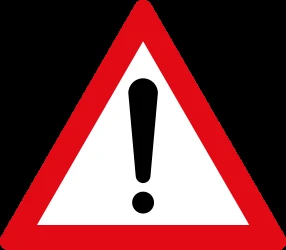
Warning for a danger with no specific traffic sign.
Warning for a danger with no specific traffic sign.

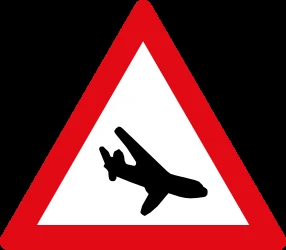
Warning for low-flying aircrafts.
Warning for low-flying aircrafts.

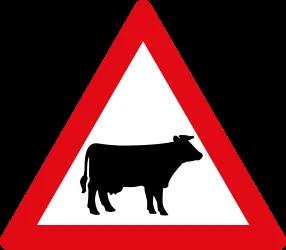
Warning for cattle on the road.
Warning for cattle on the road.

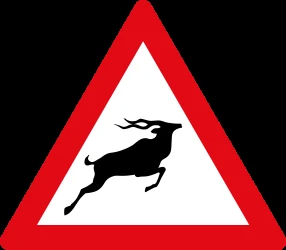
Warning for crossing deer.
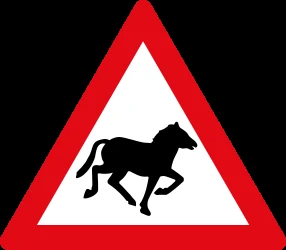
Warning for crossing deer.

Warning for wild horses on the road.
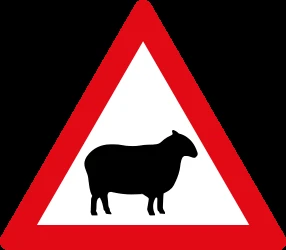
Warning for wild horses on the road.

Warning for sheep on the road.
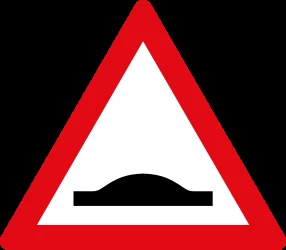
Warning for sheep on the road.

Warning for a speed bump.
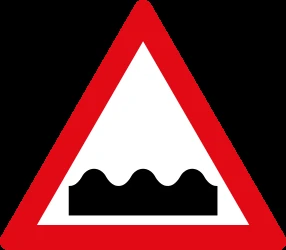
Warning for a speed bump.

Warning for a bad road surface.
Warning for a bad road surface.

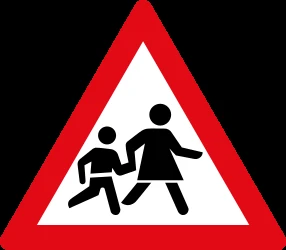
Warning for children.
Warning for children.

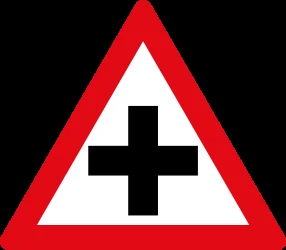
Warning for an uncontrolled crossroad.
Warning for an uncontrolled crossroad.

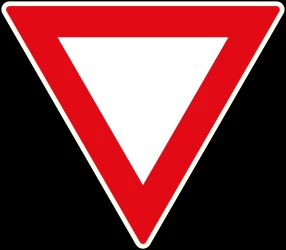
Give way to all drivers.
Give way to all drivers.

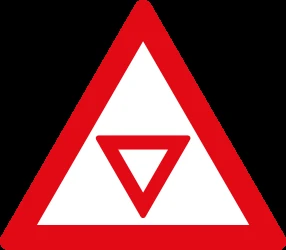
Give way ahead.

Give way ahead.

 Driving Rules & Safety Guidelines for Learners in South Africa

Practical road rules, signs, and safety tips to support learner’s licence test preparation and safer driving.

Categories

Rules of the road
Driving Signals
Speed Limits
Road traffic sign system
Rules of the road
Driving side
Vehicles must be driven on the left side of the roadway. Encroachment on the right half is permissible only when it can be done without obstructing or endangering other traffic, for no longer than necessary, and only if not prohibited by a road traffic sign or directed by a traffic officer. This rule does not apply to one-way roads.
Driving on divided roads
On divided public roads, drivers must use the left-hand roadway unless directed otherwise by a road traffic sign or traffic officer. No person shall drive over, across or within any dividing space or barrier except through designated openings, cross-overs or intersections, unless prohibited by a road traffic sign.
Passing of vehicles
Drivers intending to pass another vehicle travelling in the same direction must pass to the right at a safe distance and must not return to the left until safely clear. Passing on the left is permitted only in specific circumstances such as when the vehicle being passed is turning right, on one-way urban roads with sufficient width, or under the direction of a traffic officer. Passing is not permitted when approaching a summit, curve, or any place with restricted view unless the driver can do so without encroaching on the right side of the road.
Driving on shoulder
No person shall drive a motor vehicle on the shoulder of a public road. Driving on the shoulder is permitted only between sunrise and sunset on single-lane roads in each direction while being overtaken, provided it is safe to do so and persons and vehicles are clearly discernible at a distance of at least 150 metres.
Crossing or entering public road
A driver shall not cross a public road unless it is clear of moving traffic for a sufficient distance. A driver shall not enter a public road unless it can be done safely. A driver shall not change lanes unless it can be done without obstructing or endangering other traffic.
Driving signals
A driver who intends to stop, reduce speed, turn left or right, or move left or right must give a conspicuous signal visible to persons approaching from the front, rear, or side, and of sufficient duration to warn other road users.
Right of way at junctions
At junctions where traffic must move around a traffic island, drivers must yield the right of way to all vehicular traffic approaching from the right, unless directed otherwise by a traffic officer or road traffic sign.
Procedure when turning
When turning left, a driver must signal their intention and steer as near to the left side of the roadway as circumstances permit. When turning right on a two-way road, the driver must steer as near as possible to the immediate left of the middle of the roadway and must not obstruct or endanger other traffic. On a one-way road, the driver must steer as near as possible to the right side of the roadway when turning right.
Towing of vehicles
No person may tow another vehicle unless done in the prescribed manner. The tow-rope or tow-bar must not exceed three and a half metres. Both vehicles must be under control, the towed vehicle's steering must be controlled by a licensed driver unless steerable wheels are off the ground, and towing speed must not exceed 30 kilometres per hour unless connected by a drawbar or tow-bar. Motor cycles, tricycles, quadrucycles and pedal cycles may not tow other vehicles.
Stopping of vehicles
Except to avoid an accident, comply with a road traffic sign, follow a traffic officer's direction, or due to circumstances beyond the driver's control, no person shall stop a vehicle on the roadway alongside an excavation or obstruction, within any tunnel or subway or on any bridge or within six metres thereof, within six metres of a constricted roadway, in contravention of a road traffic sign, on the right-hand side facing oncoming traffic, alongside another vehicle on a roadway less than nine metres wide, within a railway reserve at a level crossing, within nine metres of a pedestrian crossing, or in any place that constitutes a danger or obstruction to other traffic.
Parking of vehicles
No person shall park a vehicle in contravention of a road traffic sign, in any prohibited stopping area, near a fire hydrant within one and a half metres on either side, where the vehicle would obscure a road traffic sign, on a sidewalk, or in a manner obstructing any vehicular entrance. Outside urban areas, no vehicle shall be parked on any portion of the roadway within one metre of the edge except in a designated parking place. Within urban areas, parking is prohibited within nine metres of a pedestrian crossing, within five metres of an intersection, on or over a traffic signal mechanism, with wheels more than 450 millimetres within the roadway, or on a road less than five and a half metres wide unless it is one-way. No person shall park on a traffic island, pedestrian mall or pedestrian lane. Vehicles parked in contravention may be removed and impounded by a traffic officer at the owner's expense.
Emergency and special vehicles
Drivers of fire-fighting vehicles, rescue vehicles, ambulances, traffic officers, civil protection personnel, and persons involved in road construction or essential public services may stop or park at any place necessary while executing their duties, provided they display the prescribed identification lamps.
Compulsory stops
A driver must stop their vehicle in compliance with directions from a road traffic sign or a traffic officer in uniform, or at the request of a person leading bovine animals, horses, donkeys, mules, sheep, goats, pigs or ostriches on the road.
General duties of driver or passenger
No person driving a vehicle shall reverse unless it can be done safely, follow another vehicle more closely than is reasonable and prudent, allow any person or object to obstruct the driver's control or view, permit interference with the steering mechanism, park a vehicle without setting its brake, drive from a parked position without ensuring it is safe to do so, fail to yield immediately to an emergency vehicle sounding a device or bell, allow any body part to protrude beyond the vehicle while in motion, permit passengers or animals on the roof or running boards while in motion, cause the engine to emit excessive smoke or fumes, leave the engine running while the vehicle is stationary and unattended, deposit fuel, oil or flammable matter on the road, or allow the engine to run while fuel is being delivered. No passenger shall allow any part of their body to protrude beyond the vehicle. No person shall enter or alight from a vehicle unless it is stationary and it is safe to do so. No person shall drive a vehicle on a sidewalk except for perambulators, invalid chairs, baby carts or children's play vehicles.
Prohibition on communication devices
No person shall drive a vehicle while holding a mobile or cellular telephone or any other communication device in one or both hands or with any other part of the body. Use of such devices is only permitted if the device is affixed to the vehicle or specially adapted as headgear enabling hands-free operation. This prohibition does not apply to drivers of fire-fighting vehicles, rescue vehicles, ambulances, traffic officers, members of the South African Police Service, members of the South African National Defence Force, and civil protection personnel while executing their duties.
Motorcycle rules
No person shall drive a motorcycle unless their feet are resting on the front foot-rests and they are seated astride on the saddle where the design permits. A passenger may only be carried on a motorcycle with an engine exceeding 50 cubic centimetres, seated in a side-car or astride on a pillion with feet resting on foot-rests. Not more than two persons shall ride on a motorcycle, excluding side-car passengers. Not more than two adults may be carried in a side-car. No person or animal shall be carried in front of the driver. Motorcycles must ride in single file except when overtaking. Drivers must keep at least one hand on the handlebars at all times and maintain all wheels in contact with the road surface at all times.
Excessive noise and hooter
No person shall operate a vehicle in a manner causing excessive noise that could be avoided by reasonable care. The hooter or sounding device shall only be used when necessary for compliance with regulations or on the grounds of safety.
Pedal cycle rules
Riders must be seated astride on the saddle at all times. Cyclists must ride in single file except when overtaking another pedal cycle. No cyclist shall take hold of any other vehicle in motion, deliberately swerve from side to side, carry any person, animal or object obstructing their view or control, or ride without at least one hand on the handlebars. All wheels must remain in contact with the road surface at all times. Cyclists must use designated cycle lanes where provided.
Pedestrian crossing rules
Where a pedestrian crossing is at a traffic signal, pedestrians must only cross in accordance with the signal. Drivers must yield the right of way to pedestrians within a crossing when the pedestrian is on the driver's half of the roadway or approaching closely from the other half. Pedestrians must not suddenly enter a crossing into the path of a vehicle that cannot stop in time. No driver shall pass a vehicle that has stopped to allow pedestrians to cross.
Duties of pedestrians
Where a sidewalk or footpath exists, pedestrians must not walk on the roadway except to cross or for sufficient reason. On roads without a sidewalk, pedestrians must walk as near as practicable to the right edge of the roadway to face oncoming traffic. Pedestrians must not cross a road without ensuring it is sufficiently free from traffic. Pedestrians must not linger when crossing a road and must proceed with due despatch. Pedestrians must not conduct themselves in a manner likely to constitute a danger to themselves or other traffic. Pedestrians may only cross a public road at a pedestrian crossing, an intersection, or at a distance further than 50 metres from such a crossing or intersection.
Racing and sport on public roads
No person shall organise or take part in any race or sport on a public road without prior written consent from the MEC of the relevant province or the relevant local authority. Consent may include additional conditions, speed limit exemptions, or fees. Any consent granted may be withdrawn at any time.
Hindering traffic
No person shall wilfully or unnecessarily prevent, hinder or interrupt the free passage of traffic on a public road. No person shall place or abandon any object on a public road that may endanger or cause damage to traffic.
Abandoned vehicles
Any vehicle standing on a public road in a position likely to cause danger or obstruction may be removed by a traffic officer. Vehicles parked in prohibited areas, left for more than 24 hours outside an urban area or more than seven days within an urban area, or found without a valid licence number, shall be deemed abandoned and may be removed at the owner's expense. Unclaimed vehicles may be sold after one month, with proceeds applied to removal and custody costs. Any balance unclaimed within one year shall be forfeited to the authority concerned.
Damage to public roads
No person shall cause any wheel to drag or spin on the roadway surface except in an emergency, use chocks or shoes between a vehicle wheel and the roadway, or use any vehicle or thing in a manner causing or likely to cause damage to the roadway.
Special provisions for freeways
The following are prohibited on freeways: animal-drawn vehicles, pedal cycles, motorcycles with engines not exceeding 50 cubic centimetres or electrically propelled, motor tricycles or quadrucycles, vehicles not exceeding 230 kilograms designed for disabled persons, and tractors. Pedestrians may only be on a freeway in designated stopping or parking areas or due to circumstances beyond their control. Vehicles may only stop in designated areas, due to circumstances beyond their control, or in compliance with a road traffic sign or traffic officer direction. When a driver in the rightmost lane becomes aware that another vehicle intends to overtake, they must move to the left lane without endangering others and must not accelerate until the overtaking vehicle has passed. The overtaking driver may signal their intention by flashing their headlights.
Driving Signals
Left turn signal
The driver shall extend the right arm sideward from the shoulder with the forearm in a vertical downward position and move the forearm in a circular anticlockwise motion. Alternatively, drivers of tractors, two-wheel vehicles or animal-drawn vehicles may extend the left arm and hand fully horizontal to the road with the palm turned to the front.
Right turn signal
The driver shall extend the right arm and hand sideward from the shoulder fully horizontal to the road with the palm of the hand turned to the front.
Direction indicators
Drivers of vehicles fitted with direction indicators must use them to signal intention to turn or move left or right. The indicator must be switched off as soon as the need to signal has passed. Tractor drivers may use a portable direction indicator that projects at least 300 millimetres beyond the widest part of the vehicle.
Reducing speed signal
The driver shall extend the right arm sideward from the shoulder with the forearm held in a vertical upward position and the palm of the hand turned to the front.
Permissible additional signals
To indicate slowing down, the driver may extend the right arm sideward with the palm turned downward and move the arm slowly up and down. To indicate that following traffic may overtake on the right, the driver may fully extend the right arm below shoulder level with the palm turned forward and move it backward and forward from the shoulder.
Speed Limits
General limits
The general speed limit within an urban area is 60 kilometres per hour. On public roads outside an urban area other than a freeway, the limit is 100 kilometres per hour. On freeways, the limit is 120 kilometres per hour.
Specific vehicle limits
A speed limit of 80 kilometres per hour applies to goods vehicles with a gross vehicle mass exceeding 9,000 kilograms, combinations of motor vehicles where the total gross vehicle mass exceeds 9,000 kilograms, and articulated motor vehicles where the gross combination mass exceeds 9,000 kilograms. A speed limit of 100 kilometres per hour applies to buses and minibuses used for conveying persons for reward. Goods vehicles subject to the 80 kilometres per hour limit must display an appropriate sign on the rear of the vehicle. Buses must display a sign indicating the 100 kilometres per hour limit from 1 May 2000 onwards.
Road traffic sign system
The Road Traffic Sign System has been harmonised with the Southern African Development Community Road Traffic Sign System. The primary objective is to meet the road traffic and safety needs of all road users efficiently. Changes include a new class of local direction signs for urban areas, revised sign symbols, and new signs added to harmonise with the SADC system. The system adopts the philosophy that a picture is worth a thousand words, using symbols rather than text to eliminate the need for multiple languages and reduce sign observation time. The harmonised system was expected to be fully phased in by 2005.

How Driving Licences Work in South Africa
 (Learner’s Licence and Driver’s Licence)

Driving theory is easier the more you understand the licensing process. In South Africa, before you can become a driver, you first have to apply for your learner’s license via the DLTC and then once you pass a practical test you will be able to apply for a driver’s license from the DLTC. You can find out about each process/what to bring/cost for both application processes by visiting the official pages of relevant organizations under the government on the gov.za website.

The official government website, Government of South Africa (gov.za), provides detailed guidance on both steps, including the documents you need and what to prepare when booking or submitting your application.

This page helps you prepare in a practical way: practise learner’s licence questions with explanations, study South African traffic signs, and review the common rules tested before your practical driving test.

Types of Driving Licence in South Africa

South Africa commonly uses learner’s licence codes based on vehicle type:

  • Code 1 – motorcycles
  • Code 2 – light motor vehicles (up to 3,500 kg class)
  • Code 3 – heavier vehicles / larger vehicle categories

These code groupings and common age thresholds are widely used in learner-test prep and reference material.

If you are unsure which code applies, confirm with your local DLTC before booking your learner’s test.

Minimum Age and Eligibility

Common learner’s licence minimum ages in South Africa are generally referenced as:

  • 16 years – motorcycles up to 125cc (Code 1 limited case)
  • 17 years – light motor vehicles (Code 2)
  • 18 years – heavier vehicles / larger categories (Code 3 and some motorcycle cases)

Gov.za also explains that you book your test at a DLTC and need an identity document and booking fee (plus centre-specific requirements)

Because local DLTC practices can vary, treat this section as general guidance and confirm current requirements with your testing centre.

Documents Commonly Required for a Learner’s Licence

When booking/applying for a learner’s licence, gov.za says you should go to the nearest DLTC and take:

  • An identity document (ID)
  • Photographs (the number can vary, so confirm with the DLTC)
  • A booking fee

Local centres may also ask for additional items (for example, eye test documentation or proof of address), so always confirm with your DLTC before your appointment. (Gov.za specifically tells applicants to confirm photo requirements with the centre.)

Typical Application Steps (DLTC Booking + Learner’s Test + Driver’s Test)

A typical first-time path in South Africa looks like this:

  • Go to your nearest DLTC to book a learner’s licence test date (and confirm booking requirements)
  • Study the learner’s test topics (rules of the road, signs/markings/signals, vehicle controls)
  • Take the learner’s licence test at the DLTC
  • After passing, book your driver’s licence test at the DLTC (gov.za provides a separate official process page for this)
  • Take your practical driving test and complete licence issuance steps through the DLTC.

This website supports the study part of that journey by helping you practise questions and learn signs before the learner’s test.

South Africa Learner’s Licence Test Format

Learner-test preparation in South Africa focuses on three core areas:

  • Rules of the road
  • Road traffic signs, signals and road markings
  • Vehicle controls

These topics are consistently described in learner’s licence reference material and overviews of the South African learner’s test.

The learner’s test is commonly described as a multiple-choice test covering those sections.

Key Driving Rules to Study

If you want to focus on what most often matters in South Africa learner’s licence prep, prioritise:

  • Road sign recognition (warning, regulatory, information signs)
  • Road markings and traffic signals
  • Rules of the road (priority, lane discipline, turns, stopping)
  • Vehicle controls (basic operational knowledge)
  • Safe driving behaviour and defensive-driving basics (often taught via K53 prep materials)

Studying signs and markings early usually improves practice-test performance because they appear across many question types.

How to Prepare Effectively

If you are starting from scratch, a simple plan works well:

  • Day 1–2: Learn South African road signs and road markings by category
  • Day 3–4: Review rules of the road (priority, turns, stopping, lane use)
  • Day 5–7: Practise learner’s licence questions and review explanations for every mistake (including vehicle controls)

Avoid memorising answers. Focus on understanding why an option is correct.

This site is not an official government website. For official booking steps, DLTC requirements, forms, fees, and the latest updates, refer to gov.za and your local Driving Licence Testing Centre (DLTC). Gov.za provides official pages for both learner’s licence and driver’s licence applications.

Frequently Asked Questions

Quick answers about South Africa learner’s licence practice tests, traffic signs, and DLTC booking.

 Answer: You book at your nearest Driving Licence Testing Centre (DLTC). The official gov.za learner’s licence page says to go to the nearest DLTC to book a test date and confirm the booking requirements.

 Answer: No. This website is an independent educational resource and is not affiliated with any government or licensing authority. The questions are for learning and practise. For official requirements and booking steps, check gov.za and your DLTC.

 Answer: The learner’s test commonly covers rules of the road, road signs/signals/markings, and vehicle controls.

 Answer: Gov.za says you should take your ID, the required photographs (confirm how many with your DLTC), and a booking fee.

Answer: Learn signs and markings first, then study rules of the road and vehicle controls, then practise multiple-choice questions daily and review explanations carefully. Also confirm your DLTC’s booking/document requirements before test day.

Scroll to Top